


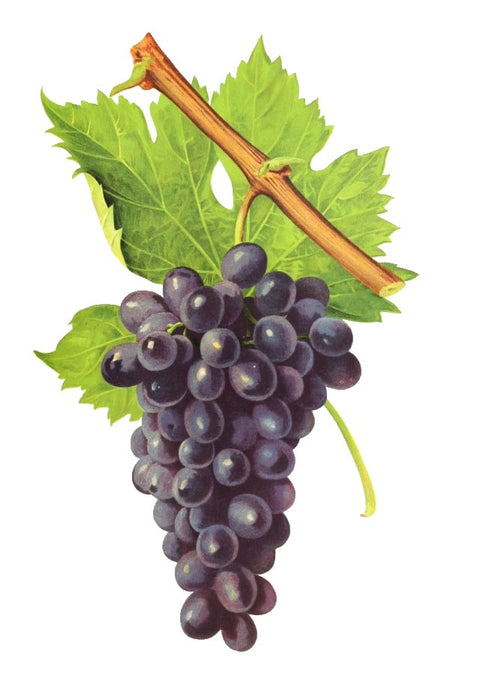
Cinsault Grape variety guide: history, French regions, taste & food pairing
Cinsault (Cinsaut) is a fragrant, light-bodied red grape of southern France and a key ingredient of Provençal and Languedoc rosés, prized for its freshness, soft tannins and floral perfume.
Learn more about Cinsault
History & origins
Cinsault is an old Mediterranean variety, probably native to the Languedoc or Provence, and has been grown in southern France for centuries. Heat- and drought-tolerant, it was widely planted in the 19th and 20th centuries. In 1925, it was crossed with Pinot Noir in South Africa to create Pinotage. Today old-vine Cinsault is enjoying a revival with producers seeking light, elegant reds.
French regions & appellations
Côtes de Provence and Coteaux d'Aix-en-Provence rosés, Tavel, Châteauneuf-du-Pape, Côtes du Rhône, Languedoc, Faugères, Saint-Chinian, Minervois and IGP Pays d'Oc.
Taste profile
Light to medium body, pale color and low tannin, with strawberry, raspberry, red cherry, violet, rose, white pepper and a refreshing, slightly herbal finish.
Food pairing
Rosés with salade Niçoise, grilled fish and Mediterranean mezze; reds with charcuterie, roast chicken, grilled vegetables, couscous and lamb skewers.
Where Cinsault grows in France
Wine regions: Corsica, Languedoc-Roussillon, Provence, Rhône
Appellations: Alpes-de-Haute-Provence, Bandol, Châteauneuf-du-Pape, Corbières, Cótes de Provence Sainte-Victoire, Côteaux d'Aix-en-Provence, Côteaux d'Enserune, Côtes de Provence, Côtes du Rhône Villages, Côtes du Rhône, IGP Cité de Carcassonne, IGP Méditerranée, IGP Pays d'Hérault, IGP Terres du Midi, IGP Île de Beauté, Minervois, Saint-Chinian, Tavel, Terraces du Larzac, Ventoux